Print and stamps
The New York Times, 15 November 1877, acclimatization article
Original source · Answer-key source
Public domain scan; human Wikisource transcription CC BY-SA 4.0. The New York Times, 15 November 1877, acclimatization article; scan hosted by Wikimedia Commons; validated transcription by en.wikisource.org contributors, revision 6546148.
The answer key
Check numbers below match the grid columns. An absence check requires the stated value to be absent in its stated field.
| Check | Kind | Expected answer | Field / row / column |
|---|---|---|---|
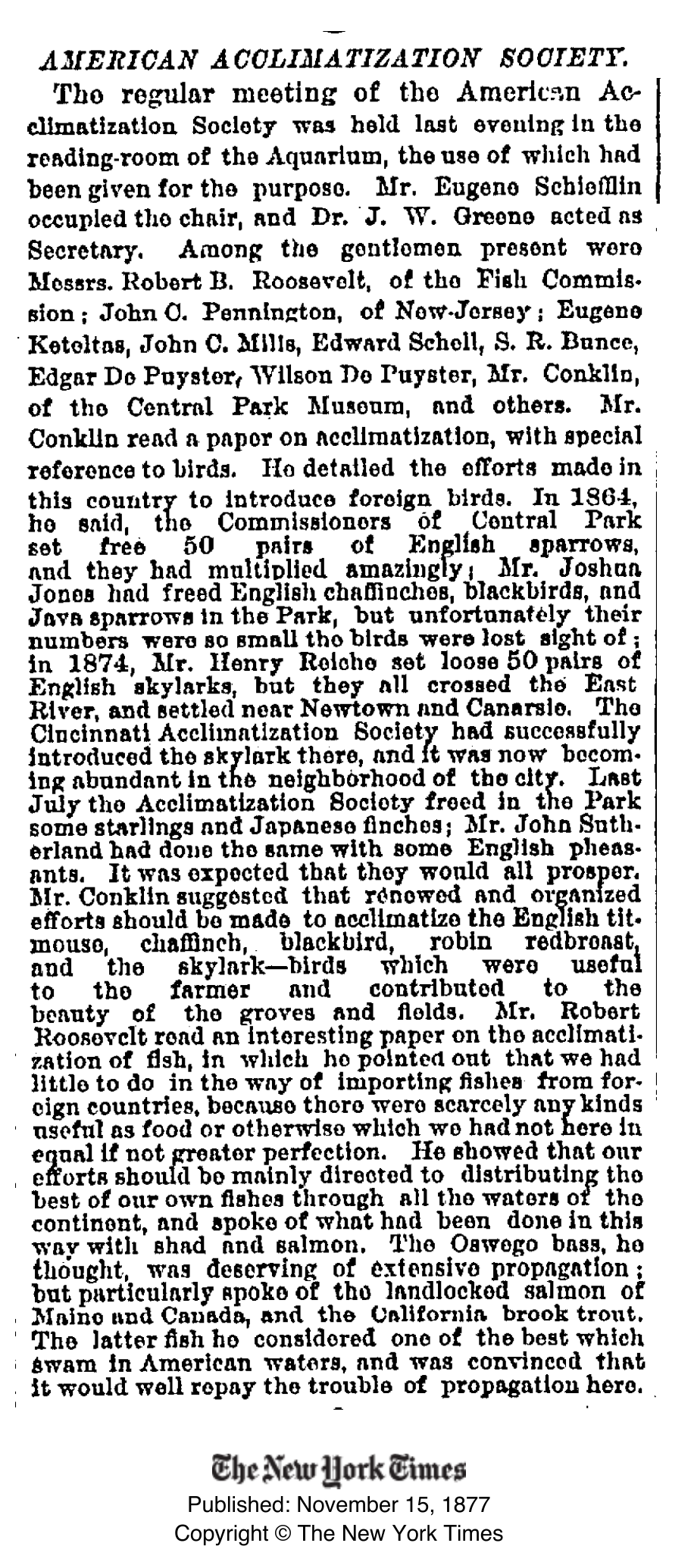
| 1 | text | AMERICAN ACCLIMATIZATION SOCIETY. | |
| 2 | text | J. W. Greene | |
| 3 | text | John C. Pennington | |
| 4 | text | Eugene Keteltas | |
| 5 | text | Mr. Joshua Jones | |
| 6 | text | Mr. Henry Reiche | |
| 7 | text | Newtown and Canarsie | |
| 8 | text | California brook trout |
Model-by-check results
Right and Wrong describe exact checks. No output scores zero. Tab reaches each result.
| Model | Page checks right | Page score / 100 | 1 | 2 | 3 | 4 | 5 | 6 | 7 | 8 |
|---|---|---|---|---|---|---|---|---|---|---|
| Claude Opus 5.5 | 8/8 | 100.0 | Right | Right | Right | Right | Right | Right | Right | Right |
| GPT-6.1 Sol | 8/8 | 100.0 | Right | Right | Right | Right | Right | Right | Right | Right |
| Claude Sonnet 5.5 | 7/8 | 87.5 | Right | Right | Wrong | Right | Right | Right | Right | Right |
| Gemini 3.8 Flash | 8/8 | 100.0 | Right | Right | Right | Right | Right | Right | Right | Right |
| Gemini 4 Argon | 8/8 | 100.0 | Right | Right | Right | Right | Right | Right | Right | Right |
| Chandra OCR 2 4-bit | 7/8 | 87.5 | Right | Right | Right | Right | Right | Wrong | Right | Right |
| Mistral OCR | 8/8 | 100.0 | Right | Right | Right | Right | Right | Right | Right | Right |
| GPT-6 Luna | 7/8 | 87.5 | Right | Right | Right | Right | Right | Wrong | Right | Right |
| LightOnOCR 3 1B | 8/8 | 100.0 | Right | Right | Right | Right | Right | Right | Right | Right |
| OCRia-1 | 7/8 | 87.5 | Right | Right | Right | Right | Right | Wrong | Right | Right |
| dots.ocr 4-bit | 7/8 | 87.5 | Right | Right | Right | Right | Right | Wrong | Right | Right |
| Nemotron 3.5 Parse | 5/8 | 62.5 | Wrong | Right | Wrong | Right | Right | Right | Wrong | Right |
| Indra | 5/8 | 62.5 | Wrong | Right | Right | Right | Wrong | Right | Wrong | Right |
| Granite-Docling | 0/8 | 0.0 | No output | No output | No output | No output | No output | No output | No output | No output |
| PaddleOCR-VL 1.6 | 5/8 | 62.5 | Wrong | Right | Right | Wrong | Wrong | Right | Right | Right |
| Tesseract 5.5.3 | 4/8 | 50.0 | Wrong | Right | Wrong | Wrong | Wrong | Right | Right | Right |
Raw model outputs beside the key
Key reference
AMERICAN ACCLIMATIZATION SOCIETY.J. W. GreeneJohn C. PenningtonEugene KeteltasMr. Joshua JonesMr. Henry ReicheNewtown and CanarsieCalifornia brook trout
Claude Opus 5.5 · 8/8 checks in scoring unit
Scoring unit: news-nyt-birds. Joined pages use the same full output.
## AMERICAN ACCLIMATIZATION SOCIETY.

The regular meeting of the American Acclimatization Society was held last evening in the reading-room of the Aquarium, the use of which had been given for the purpose. Mr. Eugene Schiefflin occupied the chair, and Dr. J. W. Greene acted as Secretary. Among the gentlemen present were Messrs. Robert B. Roosevelt, of the Fish Commission; John C. Pennington, of New-Jersey; Eugene Keteltas, John C. Mills, Edward Schell, S. R. Bunce, Edgar De Puyster, Wilson De Puyster, Mr. Conklin, of the Central Park Museum, and others. Mr. Conklin read a paper on acclimatization, with special reference to birds. He detailed the efforts made in this country to introduce foreign birds. In 1864, he said, the Commissioners of Central Park set free 50 pairs of English sparrows, and they had multiplied amazingly; Mr. Joshua Jones had freed English chaffinches, blackbirds, and Java sparrows in the Park, but unfortunately their numbers were so small the birds were lost sight of; in 1874, Mr. Henry Reiche set loose 50 pairs of English skylarks, but they all crossed the East River, and settled near Newtown and Canarsie. The Cincinnati Acclimatization Society had successfully introduced the skylark there, and it was now becoming abundant in the neighborhood of the city. Last July the Acclimatization Society freed in the Park some starlings and Japanese finches; Mr. John Sutherland had done the same with some English pheasants. It was expected that they would all prosper. Mr. Conklin suggested that renewed and organized efforts should be made to acclimatize the English titmouse, chaffinch, blackbird, robin redbreast, and the skylark—birds which were useful to the farmer and contributed to the beauty of the groves and fields. Mr. Robert Roosevelt read an interesting paper on the acclimatization of fish, in which he pointed out that we had little to do in the way of importing fishes from foreign countries, because there were scarcely any kinds useful as food or otherwise which we had not here in equal if not greater perfection. He showed that our efforts should be mainly directed to distributing the best of our own fishes through all the waters of the continent, and spoke of what had been done in this way with shad and salmon. The Oswego bass, he thought, was deserving of extensive propagation; but particularly spoke of the landlocked salmon of Maine and Canada, and the California brook trout. The latter fish he considered one of the best which swam in American waters, and was convinced that it would well repay the trouble of propagation here.

The New York Times
Published: November 15, 1877
Copyright © The New York Times
GPT-6.1 Sol · 8/8 checks in scoring unit
Scoring unit: news-nyt-birds. Joined pages use the same full output.
# AMERICAN ACCLIMATIZATION SOCIETY.

The regular meeting of the American Acclimatization Society was held last evening in the reading-room of the Aquarium, the use of which had been given for the purpose. Mr. Eugene Schiefflin occupied the chair, and Dr. J. W. Greene acted as Secretary. Among the gentlemen present were Messrs. Robert B. Roosevelt, of the Fish Commission; John C. Pennington, of New-Jersey; Eugene Keteltas, John C. Mills, Edward Schell, S. R. Bunce, Edgar De Peyster, Wilson De Puyster, Mr. Conklin, of the Central Park Museum, and others. Mr. Conklin read a paper on acclimatization, with special reference to birds. He detailed the efforts made in this country to introduce foreign birds. In 1864, he said, the Commissioners of Central Park set free 50 pairs of English sparrows, and they had multiplied amazingly; Mr. Joshua Jones had freed English chaffinches, blackbirds, and Java sparrows in the Park, but unfortunately their numbers were so small the birds were lost sight of; in 1874, Mr. Henry Reiche set loose 50 pairs of English skylarks, but they all crossed the East River, and settled near Newtown and Canarsie. The Cincinnati Acclimatization Society had successfully introduced the skylark there, and it was now becoming abundant in the neighborhood of the city. Last July the Acclimatization Society freed in the Park some starlings and Japanese finches; Mr. John Sutherland had done the same with some English pheasants. It was expected that they would all prosper. Mr. Conklin suggested that renewed and organized efforts should be made to acclimatize the English titmouse, chaffinch, blackbird, robin redbreast, and the skylark—birds which were useful to the farmer and contributed to the beauty of the groves and fields. Mr. Robert Roosevelt read an interesting paper on the acclimatization of fish, in which he pointed out that we had little to do in the way of importing fishes from foreign countries, because there were scarcely any kinds useful as food or otherwise which we had not here in equal if not greater perfection. He showed that our efforts should be mainly directed to distributing the best of our own fishes through all the waters of the continent, and spoke of what had been done in this way with shad and salmon. The Oswego bass, he thought, was deserving of extensive propagation; but particularly spoke of the landlocked salmon of Maine and Canada, and the California brook trout. The latter fish he considered one of the best which swam in American waters, and was convinced that it would well repay the trouble of propagation here.

The New York Times

Published: November 15, 1877

Copyright © The New York Times
Claude Sonnet 5.5 · 7/8 checks in scoring unit
Scoring unit: news-nyt-birds. Joined pages use the same full output.
# AMERICAN ACCLIMATIZATION SOCIETY.

The regular meeting of the American Acclimatization Society was held last evening in the reading-room of the Aquarium, the use of which had been given for the purpose. Mr. Eugene Schieffelin occupied the chair, and Dr. J. W. Greene acted as Secretary. Among the gentlemen present were Messrs. Robert B. Roosevelt, of the Fish Commission; John O. Pennington, of New-Jersey; Eugene Keteltas, John C. Mills, Edward Schell, S. R. Bunce, Edgar De Puyster, Wilson De Puyster, Mr. Conklin, of the Central Park Museum, and others. Mr. Conklin read a paper on acclimatization, with special reference to birds. He detailed the efforts made in this country to introduce foreign birds. In 1864, he said, the Commissioners of Central Park set free 50 pairs of English sparrows, and they had multiplied amazingly; Mr. Joshua Jones had freed English chaffinches, blackbirds, and Java sparrows in the Park, but unfortunately their numbers were so small the birds were lost sight of; in 1874, Mr. Henry Reiche set loose 50 pairs of English skylarks, but they all crossed the East River, and settled near Newtown and Canarsie. The Cincinnati Acclimatization Society had successfully introduced the skylark there, and it was now becoming abundant in the neighborhood of the city. Last July the Acclimatization Society freed in the Park some starlings and Japanese finches; Mr. John Sutherland had done the same with some English pheasants. It was expected that they would all prosper. Mr. Conklin suggested that renewed and organized efforts should be made to acclimatize the English titmouse, chaffinch, blackbird, robin redbreast, and the skylark—birds which were useful to the farmer and contributed to the beauty of the groves and fields. Mr. Robert Roosevelt read an interesting paper on the acclimatization of fish, in which he pointed out that we had little to do in the way of importing fishes from foreign countries, because there were scarcely any kinds useful as food or otherwise which we had not here in equal if not greater perfection. He showed that our efforts should be mainly directed to distributing the best of our own fishes through all the waters of the continent, and spoke of what had been done in this way with shad and salmon. The Oswego bass, he thought, was deserving of extensive propagation; but particularly spoke of the landlocked salmon of Maine and Canada, and the California brook trout. The latter fish he considered one of the best which swam in American waters, and was convinced that it would well repay the trouble of propagation here.

The New York Times
Published: November 15, 1877
Copyright © The New York Times
Gemini 3.8 Flash · 8/8 checks in scoring unit
Scoring unit: news-nyt-birds. Joined pages use the same full output.
AMERICAN ACCLIMATIZATION SOCIETY.

The regular meeting of the American Acclimatization Society was held last evening in the reading-room of the Aquarium, the use of which had been given for the purpose. Mr. Eugene Schieffelin occupied the chair, and Dr. J. W. Greene acted as Secretary. Among the gentlemen present were Messrs. Robert B. Roosevelt, of the Fish Commission; John C. Pennington, of New-Jersey; Eugene Keteltas, John C. Mills, Edward Schell, S. R. Bunce, Edgar De Peyster, Wilson De Peyster, Mr. Conklin, of the Central Park Museum, and others. Mr. Conklin read a paper on acclimatization, with special reference to birds. He detailed the efforts made in this country to introduce foreign birds. In 1864, he said, the Commissioners of Central Park set free 50 pairs of English sparrows, and they had multiplied amazingly; Mr. Joshua Jones had freed English chaffinches, blackbirds, and Java sparrows in the Park, but unfortunately their numbers were so small the birds were lost sight of; in 1874, Mr. Henry Reiche set loose 50 pairs of English skylarks, but they all crossed the East River, and settled near Newtown and Canarsie. The Cincinnati Acclimatization Society had successfully introduced the skylark there, and it was now becoming abundant in the neighborhood of the city. Last July the Acclimatization Society freed in the Park some starlings and Japanese finches; Mr. John Sutherland had done the same with some English pheasants. It was expected that they would all prosper. Mr. Conklin suggested that renewed and organized efforts should be made to acclimatize the English titmouse, chaffinch, blackbird, robin redbreast, and the skylark—birds which were useful to the farmer and contributed to the beauty of the groves and fields. Mr. Robert Roosevelt read an interesting paper on the acclimatization of fish, in which he pointed out that we had little to do in the way of importing fishes from foreign countries, because there were scarcely any kinds useful as food or otherwise which we had not here in equal if not greater perfection. He showed that our efforts should be mainly directed to distributing the best of our own fishes through all the waters of the continent, and spoke of what had been done in this way with shad and salmon. The Oswego bass, he thought, was deserving of extensive propagation; but particularly spoke of the landlocked salmon of Maine and Canada, and the California brook trout. The latter fish he considered one of the best which swam in American waters, and was convinced that it would well repay the trouble of propagation here.

The New York Times
Published: November 15, 1877
Copyright © The New York Times
Gemini 4 Argon · 8/8 checks in scoring unit
Scoring unit: news-nyt-birds. Joined pages use the same full output.
*AMERICAN ACCLIMATIZATION SOCIETY.*

The regular meeting of the American Acclimatization Society was held last evening in the reading-room of the Aquarium, the use of which had been given for the purpose. Mr. Eugene Schiefflin occupied the chair, and Dr. J. W. Greene acted as Secretary. Among the gentlemen present were Messrs. Robert B. Roosevelt, of the Fish Commission; John C. Pennington, of New-Jersey; Eugene Keteltas, John C. Mills, Edward Schell, S. R. Bunce, Edgar De Puyster, Wilson De Puyster, Mr. Conklin, of the Central Park Museum, and others. Mr. Conklin read a paper on acclimatization, with special reference to birds. He detailed the efforts made in this country to introduce foreign birds. In 1864, he said, the Commissioners of Central Park set free 50 pairs of English sparrows, and they had multiplied amazingly; Mr. Joshua Jones had freed English chaffinches, blackbirds, and Java sparrows in the Park, but unfortunately their numbers were so small the birds were lost sight of; in 1874, Mr. Henry Reiche set loose 50 pairs of English skylarks, but they all crossed the East River, and settled near Newtown and Canarsie. The Cincinnati Acclimatization Society had successfully introduced the skylark there, and it was now becoming abundant in the neighborhood of the city. Last July the Acclimatization Society freed in the Park some starlings and Japanese finches; Mr. John Sutherland had done the same with some English pheasants. It was expected that they would all prosper. Mr. Conklin suggested that renewed and organized efforts should be made to acclimatize the English titmouse, chaffinch, blackbird, robin redbreast, and the skylark—birds which were useful to the farmer and contributed to the beauty of the groves and fields. Mr. Robert Roosevelt read an interesting paper on the acclimatization of fish, in which he pointed out that we had little to do in the way of importing fishes from foreign countries, because there were scarcely any kinds useful as food or otherwise which we had not here in equal if not greater perfection. He showed that our efforts should be mainly directed to distributing the best of our own fishes through all the waters of the continent, and spoke of what had been done in this way with shad and salmon. The Oswego bass, he thought, was deserving of extensive propagation; but particularly spoke of the landlocked salmon of Maine and Canada, and the California brook trout. The latter fish he considered one of the best which swam in American waters, and was convinced that it would well repay the trouble of propagation here.

The New York Times
Published: November 15, 1877
Copyright © The New York Times
Chandra OCR 2 · 7/8 checks in scoring unit
Scoring unit: news-nyt-birds. Joined pages use the same full output.
<div data-bbox="50 24 909 45" data-label="Section-Header"><h2>AMERICAN ACCLIMATIZATION SOCIETY.</h2></div><div data-bbox="31 46 934 892" data-label="Text"><p>The regular meeting of the American Acclimatization Society was held last evening in the reading-room of the Aquarium, the use of which had been given for the purpose. Mr. Eugene Schiefflin occupied the chair, and Dr. J. W. Greene acted as Secretary. Among the gentlemen present were Messrs. Robert B. Roosevelt, of the Fish Commission; John C. Pennington, of New-Jersey; Eugene Keteltas, John C. Millis, Edward Schell, S. R. Bunce, Edgar De Puyster, Wilson De Puyster, Mr. Conklin, of the Central Park Museum, and others. Mr. Conklin read a paper on acclimatization, with special reference to birds. He detailed the efforts made in this country to introduce foreign birds. In 1864, he said, the Commissioners of Central Park set free 50 pairs of English sparrows, and they had multiplied amazingly; Mr. Joshua Jones had freed English chaffinches, blackbirds, and Java sparrows in the Park, but unfortunately their numbers were so small the birds were lost sight of; in 1874, Mr. Henry Rolfe set loose 50 pairs of English skylarks, but they all crossed the East River, and settled near Newtown and Canarsie. The Cincinnati Acclimatization Society had successfully introduced the skylark there, and it was now becoming abundant in the neighborhood of the city. Last July the Acclimatization Society freed in the Park some starlings and Japanese finches; Mr. John Sutherland had done the same with some English pheasants. It was expected that they would all prosper. Mr. Conklin suggested that renewed and organized efforts should be made to acclimatize the English tit-mouse, chaffinch, blackbird, robin redbreast, and the skylark—birds which were useful to the farmer and contributed to the beauty of the groves and fields. Mr. Robert Roosevelt read an interesting paper on the acclimatization of fish, in which he pointed out that we had little to do in the way of importing fishes from foreign countries, because there were scarcely any kinds useful as food or otherwise which we had not here in equal if not greater perfection. He showed that our efforts should be mainly directed to distributing the best of our own fishes through all the waters of the continent, and spoke of what had been done in this way with shad and salmon. The Oswego bass, he thought, was deserving of extensive propagation; but particularly spoke of the landlocked salmon of Maine and Canada, and the California brook trout. The latter fish he considered one of the best which swam in American waters, and was convinced that it would well repay the trouble of propagation here.</p></div><div data-bbox="298 921 675 947" data-label="Text"><p>The New York Times</p></div><div data-bbox="265 948 708 966" data-label="Text"><p>Published: November 15, 1877</p></div><div data-bbox="246 967 727 985" data-label="Text"><p>Copyright © The New York Times</p></div>
Mistral OCR · 8/8 checks in scoring unit
Scoring unit: news-nyt-birds. Joined pages use the same full output.
<file name="news-nyt-birds.pdf">
# AMERICAN ACCLIMATIZATION SOCIETY.

The regular meeting of the American Acclimatization Society was held last evening in the reading-room of the Aquarium, the use of which had been given for the purpose. Mr. Eugene Schiefflin occupied the chair, and Dr. J. W. Greene acted as Secretary. Among the gentlemen present were Messrs. Robert B. Roosevelt, of the Fish Commission; John C. Pennington, of New-Jersey; Eugene Keteltas, John C. Mills, Edward Scholl, S. R. Bunce, Edgar De Puyster, Wilson De Puyster, Mr. Conklin, of the Central Park Museum, and others. Mr. Conklin read a paper on acclimatization, with special reference to birds. He detailed the efforts made in this country to introduce foreign birds. In 1864, he said, the Commissioners of Central Park set free 50 pairs of English sparrows, and they had multiplied amazingly; Mr. Joshua Jones had freed English chaffinches, blackbirds, and Java sparrows in the Park, but unfortunately their numbers were so small the birds were lost sight of; in 1874, Mr. Henry Reiche set loose 50 pairs of English skylarks, but they all crossed the East River, and settled near Newtown and Canarsie. The Cincinnati Acclimatization Society had successfully introduced the skylark there, and it was now becoming abundant in the neighborhood of the city. Last July the Acclimatization Society freed in the Park some starlings and Japanese finches; Mr. John Sutherland had done the same with some English pheasants. It was expected that they would all prosper. Mr. Conklin suggested that renewed and organized efforts should be made to acclimatize the English titmouse, chaffinch, blackbird, robin redbreast, and the skylark—birds which were useful to the farmer and contributed to the beauty of the groves and fields. Mr. Robert Roosevelt read an interesting paper on the acclimatization of fish, in which he pointed out that we had little to do in the way of importing fishes from foreign countries, because there were scarcely any kinds useful as food or otherwise which we had not here in equal if not greater perfection. He showed that our efforts should be mainly directed to distributing the best of our own fishes through all the waters of the continent, and spoke of what had been done in this way with shad and salmon. The Oswego bass, he thought, was deserving of extensive propagation; but particularly spoke of the landlocked salmon of Maine and Canada, and the California brook trout. The latter fish he considered one of the best which swam in American waters, and was convinced that it would well repay the trouble of propagation here.

The New York Times
Published: November 15, 1877
Copyright © The New York Times
</file>
GPT-6 Luna · 7/8 checks in scoring unit
Scoring unit: news-nyt-birds. Joined pages use the same full output.
**AMERICAN ACCLIMATIZATION SOCIETY.**

The regular meeting of the American Acclimatization Society was held last evening in the reading-room of the Aquarium, the use of which had been given for the purpose. Mr. Eugene Schiefflin occupied the chair, and Dr. J. W. Greene acted as Secretary. Among the gentlemen present were Messrs. Robert B. Roosevelt, of the Fish Commission; John C. Pennington, of New-Jersey; Eugene Keteltas, John C. Millis, Edward Scholl, S. R. Bance, Edgar De Puyster, Wilson De Puyster, Mr. Conklin, of the Central Park Museum, and others. Mr. Conklin read a paper on acclimatization, with special reference to birds. He detailed the efforts made in this country to introduce foreign birds. In 1864, he said, the Commissioners of Central Park set free 50 pairs of English sparrows, and they had multiplied amazingly. Mr. Joshua Jones had freed English chaffinches, blackbirds, and Java sparrows in the Park, but unfortunately their numbers were so small the birds were lost sight of; in 1874, Mr. Henry Relohe set loose 50 pairs of English skylarks, but they all crossed the East River, and settled near Newtown and Canarsie. The Cincinnati Acclimatization Society had successfully introduced the skylark there, and it was now becoming abundant in the neighborhood of the city. Last July the Acclimatization Society freed in the Park some starlings and Japanese finches; Mr. John Sutherland had done the same with some English pheasants. It was expected that they would all prosper. Mr. Conklin suggested that renewed and organized efforts should be made to acclimatize the English titmouse, chaffinch, blackbird, robin redbreast, and the skylark—birds which were useful to the farmer and contributed to the beauty of the groves and fields. Mr. Robert Roosevelt read an interesting paper on the acclimatization of fish, in which he pointed out that we had little to do in the way of importing fishes from foreign countries, because there were scarcely any kinds useful as food or otherwise which we had not here in equal if not greater perfection. He showed that our efforts should be mainly directed to distributing the best of our own fishes through all the waters of the continent, and spoke of what had been done in this way with shad and salmon. The Oswego bass, he thought, was deserving of extensive propagation; but particularly spoke of the landlocked salmon of Maine and Canada, and the California brook trout. The latter fish he considered one of the best which swam in American waters, and was convinced that it would well repay the trouble of propagation here.

The New York Times

Published: November 15, 1877
Copyright © The New York Times
LightOnOCR 3 1B · 8/8 checks in scoring unit
Scoring unit: news-nyt-birds. Joined pages use the same full output.
 # AMERICAN ACCLIMATIZATION SOCIETY.  The regular meeting of the American Acclimatization Society was held last evening in the reading-room of the Aquarium, the use of which had been given for the purpose. Mr. Eugene Schiefflin occupied the chair, and Dr. J. W. Greene acted as Secretary. Among the gentlemen present were Messrs. Robert B. Roosevelt, of the Fish Commission; John C. Pennington, of New-Jersey; Eugene Keteltas, John C. Mills, Edward Schell, S. R. Bunce, Edgar De Puyster, Wilson De Puyster, Mr. Conklin, of the Central Park Museum, and others. Mr. Conklin read a paper on acclimatization, with special reference to birds. He detailed the efforts made in this country to introduce foreign birds. In 1864, he said, the Commissioners of Central Park set free 50 pairs of English sparrows, and they had multiplied amazingly; Mr. Joshua Jones had freed English chaffinches, blackbirds, and Java sparrows in the Park, but unfortunately their numbers were so small the birds were lost sight of; in 1874, Mr. Henry Reiche set loose 50 pairs of English skylarks, but they all crossed the East River, and settled near Newtown and Canarsie. The Cincinnati Acclimatization Society had successfully introduced the skylark there, and it was now becoming abundant in the neighborhood of the city. Last July the Acclimatization Society freed in the Park some starlings and Japanese finches; Mr. John Sutherland had done the same with some English pheasants. It was expected that they would all prosper. Mr. Conklin suggested that renewed and organized efforts should be made to acclimatize the English titmouse, chaffinch, blackbird, robin redbreast, and the skylark—birds which were useful to the farmer and contributed to the beauty of the groves and fields. Mr. Robert Roosevelt read an interesting paper on the acclimatization of fish, in which he pointed out that we had little to do in the way of importing fishes from foreign countries, because there were scarcely any kinds useful as food or otherwise which we had not here in equal if not greater perfection. He showed that our efforts should be mainly directed to distributing the best of our own fishes through all the waters of the continent, and spoke of what had been done in this way with shad and salmon. The Oswego bass, he thought, was deserving of extensive propagation; but particularly spoke of the landlocked salmon of Maine and Canada, and the California brook trout. The latter fish he considered one of the best which swam in American waters, and was convinced that it would well repay the trouble of propagation here.  **The New York Times**  Published: November 15, 1877  Copyright © The New York Times
OCRia-1 · 7/8 checks in scoring unit
Scoring unit: news-nyt-birds. Joined pages use the same full output.
# **AMERICAN ACCLIMATIZATION SOCIETY.**

The regular meeting of the American Acclimatization Society was held last evening in the reading-room of the Aquarium, the use of which had been given for the purpose. Mr. Eugene Schiefflin occupied the chair, and Dr. J. W. Greene acted as Secretary. Among the gentlemen present were Messrs. Robert B. Roosevelt, of the Fish Commission; John C. Pennington, of New-Jersey; Eugene Keteltas, John C. Millis, Edward Schell, S. R. Bunce, Edgar De Puyster, Wilson De Puyster, Mr. Conklin, of the Central Park Museum, and others. Mr. Conklin read a paper on acclimatization, with special reference to birds. He detailed the efforts made in this country to introduce foreign birds. In 1864, he said, the Commissioners of Central Park set free 50 pairs of English sparrows, and they had multiplied amazingly; Mr. Joshua Jones had freed English chaffinches, blackbirds, and Java sparrows in the Park, but unfortunately their numbers were so small the birds were lost sight of; in 1874, Mr. Henry Rolfe set loose 50 pairs of English skylarks, but they all crossed the East River, and settled near Newtown and Canarsie. The Cincinnati Acclimatization Society had successfully introduced the skylark there, and it was now becoming abundant in the neighborhood of the city. Last July the Acclimatization Society freed in the Park some starlings and Japanese finches; Mr. John Sutherland had done the same with some English pheasants. It was expected that they would all prosper. Mr. Conklin suggested that renewed and organized efforts should be made to acclimatize the English titmouse, chaffinch, blackbird, robin redbreast, and the skylark—birds which were useful to the farmer and contributed to the beauty of the groves and fields. Mr. Robert Roosevelt read an interesting paper on the acclimatization of fish, in which he pointed out that we had little to do in the way of importing fishes from foreign countries, because there were scarcely any kinds useful as food or otherwise which we had not here in equal if not greater perfection. He showed that our efforts should be mainly directed to distributing the best of our own fishes through all the waters of the continent, and spoke of what had been done in this way with shad and salmon. The Oswego bass, he thought, was deserving of extensive propagation; but particularly spoke of the landlocked salmon of Maine and Canada, and the California brook trout. The latter fish he considered one of the best which swam in American waters, and was convinced that it would well repay the trouble of propagation here.

----

The New York Times
Published: November 15, 1877
Copyright © The New York Times
dots.ocr · 7/8 checks in scoring unit
Scoring unit: news-nyt-birds. Joined pages use the same full output.
# AMERICAN ACCLIMATIZATION SOCIETY.

The regular meeting of the American Acclimatization Society was held last evening in the reading-room of the Aquarium, the use of which had been given for the purpose. Mr. Eugene Schiefflin occupied the chair, and Dr. J. W. Greene acted as Secretary. Among the gentlemen present were Messrs. Robert B. Roosevelt, of the Fish Commission; John C. Pennington, of New-Jersey; Eugene Keteltas, John C. Mills, Edward Schell, S. R. Bunce, Edgar De Puyster, Wilson De Puyster, Mr. Conklin, of the Central Park Museum, and others. Mr. Conklin read a paper on acclimatization, with special reference to birds. He detailed the efforts made in this country to introduce foreign birds. In 1864, he said, the Commissioners of Central Park set free 50 pairs of English sparrows, and they had multiplied amazingly; Mr. Joshua Jones had freed English chaffinches, blackbirds, and Java sparrows in the Park, but unfortunately their numbers were so small the birds were lost sight of; in 1874, Mr. Henry Relche set loose 50 pairs of English skylarks, but they all crossed the East River, and settled near Newtown and Canarsie. The Cincinnati Acclimatization Society had successfully introduced the skylark there, and it was now becoming abundant in the neighborhood of the city. Last July the Acclimatization Society freed in the Park some starlings and Japanese finches; Mr. John Sutherland had done the same with some English pheasants. It was expected that they would all prosper. Mr. Conklin suggested that renewed and organized efforts should be made to acclimatize the English titmouse, chaffinch, blackbird, robin, redbreast, and the skylark—birds which were useful to the farmer and contributed to the beauty of the groves and fields. Mr. Robert Roosevelt read an interesting paper on the acclimatization of fish, in which he pointed out that we had little to do in the way of importing fishes from foreign countries, because there were scarcely any kinds useful as food or otherwise which we had not here in equal if not greater perfection. He showed that our efforts should be mainly directed to distributing the best of our own fishes through all the waters of the continent, and spoke of what had been done in this way with shad and salmon. The Oswego bass, he thought, was deserving of extensive propagation; but particularly spoke of the landlocked salmon of Maine and Canada, and the California brook trout. The latter fish he considered one of the best which swam in American waters, and was convinced that it would well repay the trouble of propagation here.

Published: November 15, 1877
Copyright © The New York Times
Nemotron 3.5 Parse · 5/8 checks in scoring unit
Scoring unit: news-nyt-birds. Joined pages use the same full output.
## _AMERICAN ACOLIMATIZATION SOCIETY._

The regular meeting of the American Ac-
climatization Society was held last evening in the
reading-room of the Aquarium, the use of which had
been given for the purpose. Mr. Eugene Schieffin
occupied the chair, and Dr. J. W. Greene acted as
Secretary. Among the gentlemen present were
Messrs. Robert B. Roosevelt, of the Fish Commis-
sion ; John O. Pennington, of New-Jersey ; Eugene
Keteltas, John C. Mills, Edward Schell, S. R. Bunce,
Edgar De Puyster, Wilson De Puyster, Mr. Conklin,
of the Central Park Museum, and others. Mr.
Conklin read a paper on acclimatization, with special
reference to birds. He detailed the efforts made in
this country to introduce foreign birds. In 1864,
he said, the Commissioners of Central Park
set free 50 pairs of English sparrows,
and they had multiplied amazingly ; Mr. Joshua
Jones had freed English chaffinches, blackbirds, and
Java sparrows in the Park, but unfortunately their
numbers were so small the birds were lost sight of ;
in 1874, Mr. Henry Reiche set loose 50 pairs of
English skylarks, but they all crossed the East
River, and settled near Newtown and Canarsle. The
Cincinnati Acclimatization Society had successfully
introduced the skylark there, and it was now becom-
ing abundant in the neighborhood of the city. Last
July the Acclimatization Society freed in the Park
some starlings and Japanese finches ; Mr. John Suth-
erland had done the same with some English pheas-
ants. It was expected that they would all prosper.
Mr. Conklin suggested that renewed and organized
efforts should be made to acclimatize the English tit-
mouse, chaffinch, blackbird, robin redbreast,
and the skylark-birds which were useful
to the farmer and contributed to the
beauty of the groves and fields. Mr. Robert
Roosevelt read an interesting paper on the acclimati-
zation of fish, in which he pointed out that we had
little to do in the way of importing fishes from for-
cign countries, because there were scarcely any kinds
useful as food or otherwise which we had not here in
equal if not greater perfection. He showed that our
efforts should be mainly directed to distributing the
best of our own fishes through all the waters of the
continent, and spoke of what had been done in this
way with shad and salmon. The Oswego bass, he
thought, was deserving of extensive propagation ;
but particularly spoke of the landlocked salmon of
Maline and Canada, and the California brook trout.
The latter fish he considered one of the best which
swam in American waters, and was convinced that
it would well repay the trouble of propagation here.

**The New York Times**

Published: November 15, 1877
Copyright © The New York Times
Indra · 5/8 checks in scoring unit
Scoring unit: news-nyt-birds. Joined pages use the same full output.
## AMERICAN ACOLIMATIZATION

SOCIETY.

The regular meeting of the American Ac-| climatization Soclety was held last evening in the reading-room of the Aquarlum, the use of which had been given for the purpose. Mr. Eugeno Schiefilin| occupled tho chair, and Dr. J. W. Greene acted ns Secretary. Among the gentlomen presont wero Mossrs. Robert B. Roosevelt, of the Fish Commis. sion; John C. Pennington, of Now-Jersey; Eugene Keteltas, John C. Mills, Edward Schell, S. R. Bunce, Edgar De Puyster, Wilson De Puyster, Mr. Conklin, of the Central Park Museum, and others. Mr. Conklin read a papor on acclimatization, with special reference to birds. Ho detalled the efforts made in this country to introduce foreign birds. In 1864, he said, the Commissioners of Contral Park set free 50 pairs of English aparrows, and they had multiplied amazingly; Mr. Joshun Jones had freed English chaffinches, blackbirds, and Java sparrows in the Park, but unfortunately their numbers were so small tho birds were lost sight of ; in 1874, Mr. Henry Reiche set loose 50 pairs of English skylarks, but they all crossed the East River, and settled near Newtown and Canarsle. The Clncinnati Acclinatization Society had successfully introduced the skylark there, and it was now becoming abundant in the neighborhood of the city. Last July the Acclimatization Society freed in the Park some starlings and Japanese finches; Mr. John Suth. erland had done the same with some English pheasants. It was expected that they would all prosper. Mr. Conklin suggested that renowed and organized efforts should be made to acclimatize the English tit. mouse, chaffinch, blackbird, robin redbreast, and the skylark—birds which wero useful to the farmer and contributed to the beauty of the groves and felds. Mr. Robert Roosevelt read an interesting paper on the acclimati. zation of fish, in whlch ho pointed out that we had little to do in the way of importing fishes from foreign countries, because thore were scarcely any kinds nseful as food or otherwise which we had not here in equal if not greater perfection. He showed that our efforts should be mainly directed to distributing tho best of our own fishes through all the waters of the continent, and spoke of what had been done in this way with shad and salmon. The Oswego bass, ho thought, was deserving of extensive propagation; but particularly spoke of tho landlocked salmon of Maino and Canada, and the California brook trout, The latter fish ho considered one of the best which swam in American waters, and was convinced that it would well repay the trouble of propagation here.
Granite-Docling · 0/8 checks in scoring unit
Scoring unit: news-nyt-birds. Joined pages use the same full output.
<loc_0><loc_0><loc_500><loc_500><|end_of_text|>
PaddleOCR-VL 1.6 · 5/8 checks in scoring unit
Scoring unit: news-nyt-birds. Joined pages use the same full output.
AMERICAN ACOLIMATIZATION SOCIETY.
The regular meeting of the American Ac-
climatization Society was held last evening in the
reading-room of the Aquarium, the use of which had
been given for the purpose. Mr. Eugene Schiefflin
occupied the chair, and Dr. J. W. Greene acted as
Secretary. Among the gentlemen present were
Messrs. Robert B. Roosevelt, of the Fish Commis-
sion; John C. Pennington, of New Jersey; Eugene
Ketelton, John C. Mills, Edward Schell, S. R. Bunce,
Edgar De Puyster, Wilson De Puyster, Mr. Conklin,
of the Central Park Museum, and others. Mr.
Conklin read a paper on acclimatization, with special
reference to birds. He detailed the efforts made in
this country to introduce foreign birds. In 1864,
he said, the Commissioners of Central Park
set free 50 pairs of English sparrows,
and they had multiplied amazingly; Mr. Joshu-
Jones had freed English chaffinches, blackbirds, and
Java sparrows in the Park, but unfortunately their
numbers were so small the birds were lost sight of;
in 1874, Mr. Henry Reiche set loose 50 pairs of
English skylarks, but they all crossed the East
River, and settled near Newtown and Canarsie. The
Clincnatti Acclimatization Society had successfully
introduced the skylark there, and it was now becoming
abundant in the neighborhood of the city. Last
July the Acclimatization Society freed in the Park
some starlings and Japanese finches; Mr. John Suth-
erland had done the same with some English pheas-
ants. It was expected that they would all prosper.
Mr. Conklin suggested that renewed and organized
efforts should be made to acclimatize the English tit-
mouse, chaffinch, blackbird, robin redbreast,
and the skylark—birds which were useful
to the farmer and contributed to the
beauty of the groves and fields. Mr. Robert
Roosevelt read an interesting paper on the acclimat-
ization of fish, in which he pointed out that we had
little to do in the way of importing fishes from for-
cign countries, because there were scarcely any kinds
useful as food or otherwise which we had not here in
equal if not greater perfection. He showed that our
efforts should be mainly directed to distributing the
best of our own fishes through all the waters of the
continent, and spoke of what had been done in this
way with shad and salmon. The Oswego bass, he
thought, was deserving of extensive propagation;
but particularly spoke of the landlocked salmon of
Maine and Canada, and the California brook trout.
The latter fish he considered one of the best which
swam in American waters, and was convinced that
it would well repay the trouble of propagation here.

The New York Times
Published: November 15, 1877
Copyright © The New York Times
Tesseract 5.5.3 · 4/8 checks in scoring unit
Scoring unit: news-nyt-birds. Joined pages use the same full output.
AMERICAN ACOLIMATIZATION SOOIETY.

Tho regular meeting of the American Ac-
elimatization Socloty was held last evening in the
reading-room of the Aquarium, the use of which had
been given for the purpose. Mr. Eugene Schiefilin

occupled tho chair, and Dr. J. W. Greene acted as —

Secretary. Among the gontlomen presont wero
Mossrs. Robert B. Roosevelt, of tha Fish Commis.
sion; John 0. Pennington, of Now-Jorsey ; Eugeno
' Keteltas, John C. Afilis, Edward Scholl, S. R. Bunce,
Edgar Do Puyster, Wilson De Puyster, Mr. Conklin,
of the Central Park Musoum, and others. Mr.
Conklin read a papor on acclimatization, with special
reference to birds. Ho detatled the efforts mado in

this country to introduce foreign birds. In 1864,
he said, the Commissioners of Contral Park
set free 50 pairs of English sparrows,
and they had multiplied amazingly; Mr. Joshan
Jones had freed English chaffinches, blackbirds, and
Jove sparrows in the Park, but unfortunately their
numbers were so small tho birds were lost sight of ;
in 1874, Mr. Henry Reiche set loose 50 pairs of
English skylarks, but they nll crossed the East
River, and settled near Newtown and Canarsie. The
Cincinnati Acclimatization Society had successfully
Sntroduced the skylark there, and it was now becom-
ing abundant in the neighborhood of the city. Lnst
July the Acclimatization Socioty froed in the Park
sone starlings and Japaneso finches; Mr. John Suth-
erland had done the same with some English pheas-
ants. It was expected that they would all prosper.
Mr. Conklin suggosted that rénowed and_organized
efforts should be made to acclimatize the English tit-
mouse, chaffinch, blackbird, robin redbronat
and the skylark—birds which wero useful
to tho farmer and _ contributed to the
peauty of the groves and flelds. Mr. Robert
Roosevelt road an interesting paper on the acelimati-
gation of fish, in which ho pointed out that we had
little to do in the way of importing fishea from for-
cign countries, because thore wero scarcely any kinds
 aseful as food or otherwise which we had not hero in
equal if not greater perfection. He showed that our
_ efforts should be mainly directed to distributing tho
best of our own fishes through all the waters of the
continent, and spoke of what had been done in this
way with shad and salmon, The Oawogo bass, ho
thought, was deserving of éxtensive propagation ;
but particularly apoke of tho Iandlocked salmon of
| Maino and Canada, and the California brook trout,
' The latter fish he considered one of the best which
| Swam in American waters, and was convinced that
. it would well repay the trouble of propagation here. |

Ehe New iork Cimes

Published: November 15, 1877
Copyright © The New York Times